
Why are Ivorian folktales essential for children?
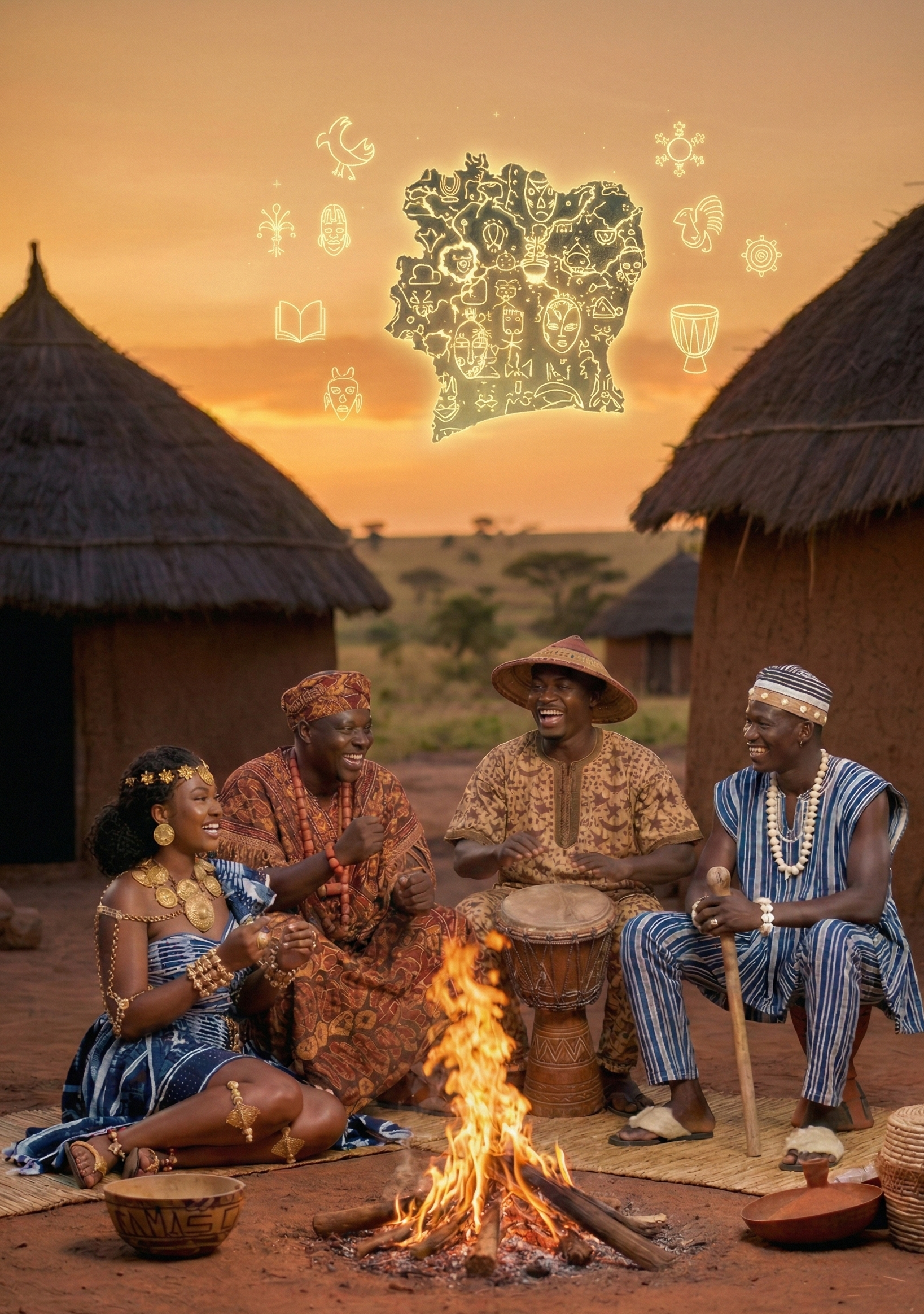
In an age of screens, imported cartoons and ultra-fast content, we have sometimes forgotten a treasure right before our eyes: the Ivorian tales. And yet they are much more than simple stories told by moonlight. They are a key to raising strong, aware children who are proud of their roots.
1. Ivorian tales shape the mind from childhood
An Ivorian tale is never just “for entertainment.” Every story hides a lesson: respect, wisdom, patience, courage, solidarity. Through the adventures of clever, brave or sometimes overly proud characters, the child learns to:
- tell right from wrong
- understand the consequences of their actions
- develop critical thinking
It is a school of life, told with poetry.
2. They pass on African values, naturally
Before schoolbooks, our ancestors used tales to educate. Values were passed on through the spoken word, repetition and emotion. Ivorian tales teach:
- respect for elders
- the importance of community
- our relationship with nature
- humility in the face of life
The child doesn’t feel “forced to learn.” They absorb. They understand. They remember.
3. They strengthen children’s cultural identity
Growing up listening only to stories from elsewhere can leave a void. Ivorian tales allow a child to say:
“This story looks like me. This culture is mine.”
They celebrate:
- local languages
- traditions
- African references
- the history of Côte d’Ivoire
The result? Children who are more confident, more rooted, prouder of who they are.
4. They stimulate imagination and creativity
Talking animals, forest spirits, mysterious villages, cunning heroes. Ivorian tales open up a limitless imagination.
They develop:
- the ability to tell stories
- a love of reading
- creativity
- oral expression
A child who listens to tales often becomes an adult who knows how to tell stories, persuade and create.
5. Preserving tales means preparing the future
When we pass a tale on to a child, we are not only recounting the past. We plant a seed for the future. Preserving and sharing Ivorian tales means:
- fighting cultural forgetting
- protecting our intangible heritage
- preparing a generation aware of its roots
In conclusion
Ivorian tales are not outdated.
They are timeless.
They are powerful.
They are necessary.
Telling a tale to a child today means offering them much more than a story:
it means giving them an identity, values and a compass for life.
What if we started telling our stories again?