
Frédéric Bruly Bouabré: the man who invented the Bété alphabet
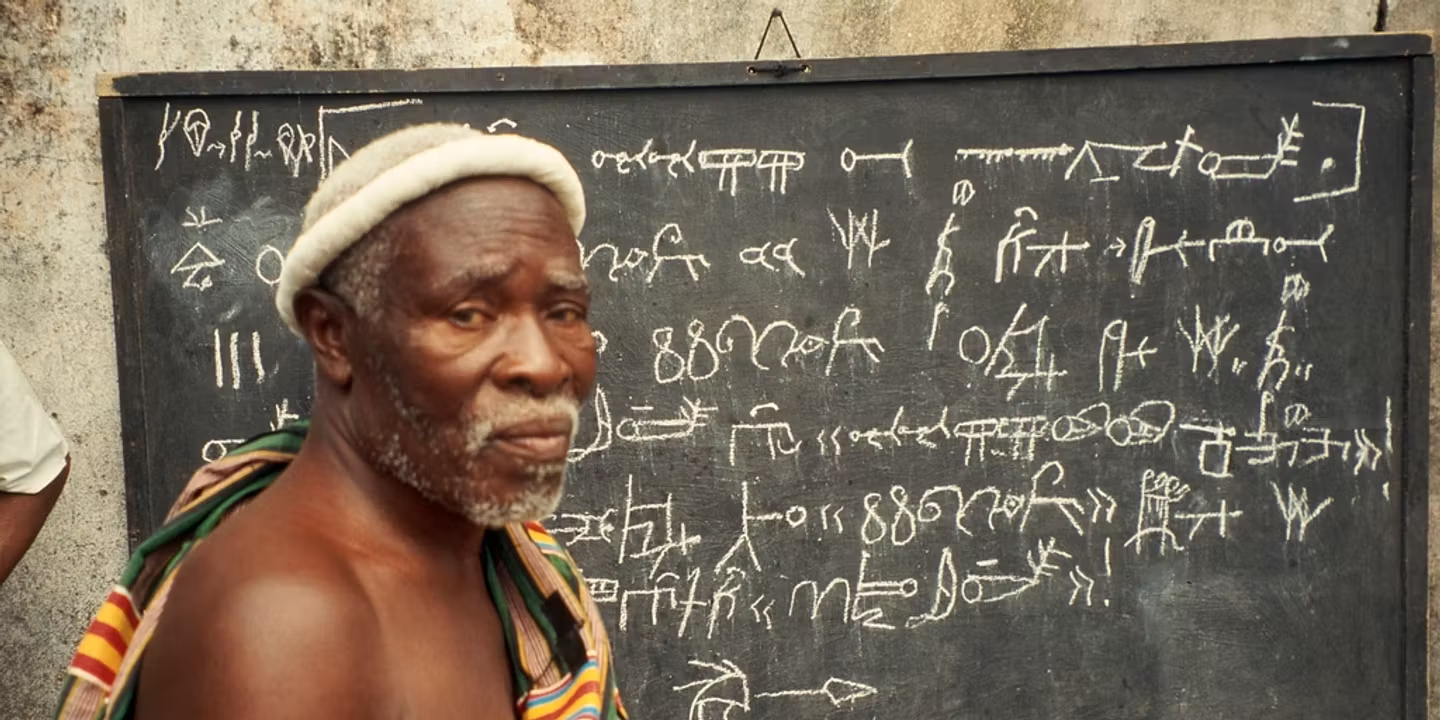
In Côte d’Ivoire, some figures leave their mark on history without making much noise. Frédéric Bruly Bouabré is one of them. An artist, thinker and keeper of memory, he is best known for creating the Bété alphabet, giving his mother tongue a unique writing system.
His work goes far beyond art. It touches on identity, transmission and the recognition of African cultures.
Who was Frédéric Bruly Bouabré?
Born in 1923 in Zépréguhé, in west-central Côte d’Ivoire, Frédéric Bruly Bouabré belonged to the Bété people. Self-taught, he took an early interest in culture, spirituality and collective memory.
In the 1940s, he said he experienced a spiritual revelation that would guide his whole life. He then took the name Cheik Nadro, which means “He who does not forget.” A way of affirming his mission: to preserve and pass on knowledge.
He died in 2014, leaving behind a monumental body of work recognized internationally.
The invention of the Bété alphabet: a cultural revolution
Why create an alphabet?
For a long time, many African languages were essentially oral. This meant that tales, proverbs, history and knowledge were passed down from generation to generation, but remained vulnerable to being forgotten.
Frédéric Bruly Bouabré wanted to change that.
His ambition was clear:
- Give the Bété people a script
- Make it possible to safeguard traditions
- Affirm the value of African languages
How was the Bété alphabet born?
In 1956, he developed an alphabet made up of about 449 syllabic signs. Each symbol represents a sound of the Bété language.
These signs are not merely functional: they are also visual, almost artistic. Each character is carefully drawn, sometimes accompanied by explanations.
His alphabet thus became both a linguistic tool and a work of art.
A body of work between art and memory
Frédéric Bruly Bouabré did not stop at inventing an alphabet. He produced thousands of small illustrated cards, organized into series:
- African myths and cosmogonies
- Proverbs
- History of peoples
- Universal symbols
- Philosophical reflections
His work is now exhibited in major international museums. Yet at the heart of his work there was always this simple desire: to preserve African memory.
The importance of the Bété alphabet today
The Bété alphabet represents much more than a writing system. It symbolizes:
- Cultural pride
- The assertion of identity
- The recognition of local languages
- Resistance to cultural erasure
At a time when many African languages are endangered, Bouabré’s initiative looks visionary.
Frédéric Bouabré: a legacy for future generations
Through his work, Frédéric Bruly Bouabré reminds us of something essential: a culture that is written down is protected.
His alphabet is an invitation to document, tell and pass on our stories. For authors, publishers, content creators and lovers of African heritage, his journey is a source of deep inspiration.
Valuing African languages means valuing our imaginations.
And that may be the greatest message left by the inventor of the Bété alphabet.