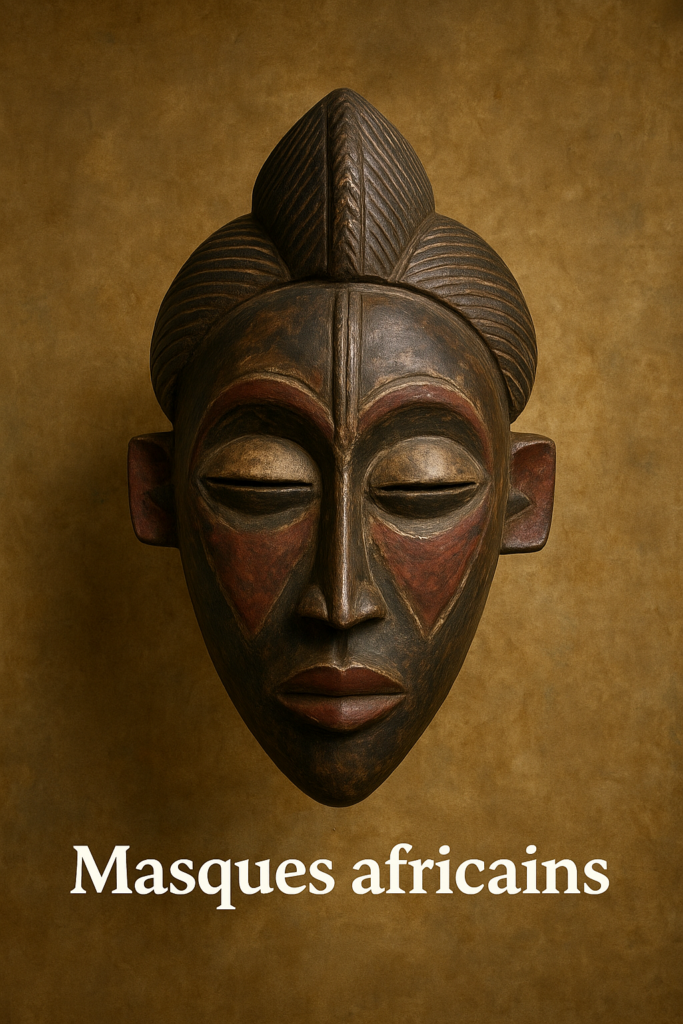
African masks: mysteries, rituals and hidden meanings
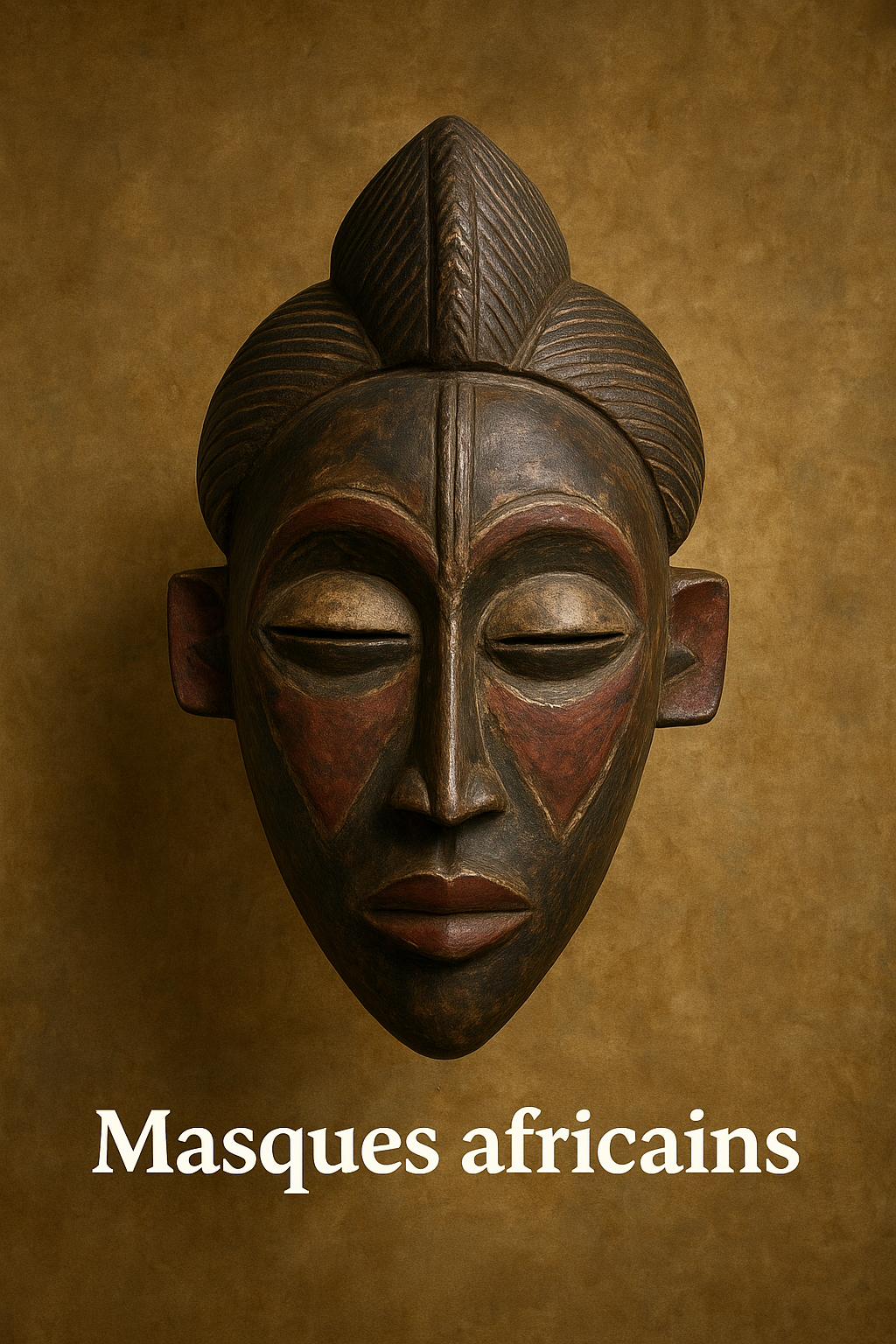
The African masks fascinate the whole world with their beauty, their striking shapes and their vivid colors. But beyond the art object, they carry a rich history, deeply linked to the spirituality, rituals and identity of African peoples. Let’s discover together the mysteries and hidden meanings behind these cultural treasures.
The sacred origin of African masks
In many African societies, the mask is not a mere decorative object: it is considered a medium between the world of the living and that of the spirits. Carved by hand, often from wood, masks were worn during ceremonies to invoke the ancestors, honor the deities or protect the community.
Each mask represents a spiritual force and holds symbolic power. The wearer is no longer himself: he embodies the spirit the mask represents.
The different roles of masks
1. Initiation rituals
Among peoples such as the Dogon (Mali) or the Senufo (Côte d’Ivoire), masks are worn during rites of passage: coming of age, funerals or weddings. They mark a social and spiritual transformation.
2. Dance and celebrations
The mask is often accompanied by spectacular dances. The movements, music and songs create a mystical atmosphere in which the mask “comes to life”.
3. Power and justice
Some masks were used to administer justice or keep order in the village. The mask then became a symbol of authority and wisdom.
The hidden meanings of masks
- Animal forms — the antelope, the elephant, the lion or the crocodile represent strength, agility or wisdom.
- Colors:
- The color white symbolizes purity and the world of the ancestors.
- The color red evokes strength, danger or vitality.
- The color black refers to fertility and mystery.
- Geometric symbols — lines, spirals and circles carry meanings related to protection and to connection with the divine.
African masks and contemporary art
Today, African masks are no longer limited to rituals. They inspire artists around the world, from Picasso to contemporary fashion designers. But it is essential to remember that these objects above all retain a deep spiritual and cultural value for the African communities that created them.
Conclusion
The African masks are much more than mere works of art: they are bridges between worlds, guardians of memory and symbols of African identity. Behind every mask lies a story, a belief and a wisdom passed down from generation to generation.